
Art Over a Cup of Coffee
Interview from Megapolis Time magazine, No. 1, 2017
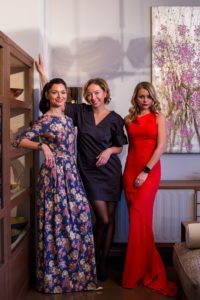
2016 was marked by many memorable events, and the world of culture and art was no exception. Who could forget the enormous queues outside the Pushkin State Museum of Fine Arts or the Tretyakov Gallery, formed by visitors eager to see exhibitions of Aivazovsky, Raphael, and other great masters? But what was the past year really like for the arts, and what predictions can be made for the coming year, 2017? In an engaging conversation, Kristina Eroshkina, who works on educational projects in art history and is also the curator of an online gallery, and Olesya Sudzhan, director of the Kvartira S online gallery, shared their thoughts on this and much more.
– Kristina, in your view, what made 2016 memorable in the art world?
Kristina Eroshkina: Undoubtedly, it will be remembered for Serov, Aivazovsky, Raphael, and, most importantly, for the unexpected public interest these exhibitions generated. It is a remarkable phenomenon: people became so interested in art that they were prepared to endure every conceivable hardship, including enormous five-hour queues in temperatures of minus thirty degrees Celsius. It was a striking indication of the growing interest in art in general and the visual arts in particular.
– Olesya, what made 2016 memorable for the gallery?
Olesya Sudzhan: The situation was much the same. People are interested not only in the classics but also in contemporary art. According to statistics, 2016 saw an increase in sales of works by emerging artists—they rose by around 10–15%. And this was despite the country’s difficult economic situation. A sustained interest in contemporary art has finally emerged in society, and although our gallery is still a young project, we have already felt its effects: we have assembled a circle of interesting and talented artists, staged more than ten successful exhibition projects, including some international ones, begun working closely with specialists in the art and design industries, and, most importantly, charted our own path of development.
– Olesya, which kind of art are people more drawn to today: classical or contemporary?
Olesya Sudzhan: I think audiences today are interested in everything. The queues at museums prove once again that works by the old masters remain relevant and sought after. It is worth noting that more young people are now attending exhibitions of classical art. And that is encouraging, because a knowledge of the classical tradition is truly essential if one wishes to understand contemporary art and find one’s way through it. As for the contemporary art market, a new generation of connoisseurs, enthusiasts, and collectors has already emerged—passionate, intelligent, curious, and knowledgeable young people who not only have purchasing power but are also happy to devote 5–10% of their annual income to investing in art. They understand the “art of living with art” and fill the spaces around them with unique or editioned works by contemporary artists, incorporating them into the décor of their homes or offices. In the past, people were more interested in the emotions they could derive from a work of art—they wanted to delight in it, let their imagination roam, be moved, and understand—whereas today they are also beginning to consider its investment potential.
– And when it comes to museums, why have people begun visiting them with renewed enthusiasm?
Kristina Eroshkina: In my view, there are many reasons for this phenomenon. First of all, speaking of the Serov exhibition, it was undoubtedly because the event received such active promotional support, with budgets being allocated to cover such events in the press and on television. It is wonderful that attention has been paid to this, that it is being publicised and supported. The second reason, undoubtedly, is that many people have come to understand that art matters. Moreover, it is important not only for adults but also for children, as growing interest can be seen in children’s education as well. Today, it is very difficult to secure a place on educational courses for children at the Pushkin State Museum of Fine Arts or the Tretyakov Gallery; there are always enormous registration queues there too. And this is precisely something that needs to be addressed: art should be accessible.
Returning to the situation with Serov, I can say that it was with his exhibition that a kind of breakthrough in widespread public interest in art became apparent; it was followed by the Aivazovsky exhibition, which attracted even greater interest, and then by Raphael at the Pushkin Museum. My prediction is that the number of people interested in art will continue to grow and grow. And that is wonderful!
For example, a collection of paintings from the Vatican Museums has now been brought to the Tretyakov Gallery. Even before the exhibition opened, admission tickets had already sold out for a month ahead. And that is despite the considerable cost of travel packages and tickets. Many people go because they recognise a surname or a celebrated name, or because they believe it is fashionable to attend the exhibition. And this brings a corresponding attitude with it. Some visitors come to catch Pokémon or take selfies. There is insufficient respect for museum staff and the exhibits. But that is the other side of the coin—in other words, it is inevitable when such mass demand emerges. Even if someone comes merely because it is fashionable, they will still see and remember something. And next time, perhaps, they will return with a more conscious purpose. Therefore, I believe that organisational measures must be taken to adapt to the growing interest in art and sustain it.
– Kristina, could you tell us more about the educational courses? I understand that you run a project of this kind.
Kristina Eroshkina: Yes, it is my hobby: I organise educational art-history projects for children and adults. One day, I plan to start my own business and launch an online-learning start-up, but for now these are only plans.
For the children’s groups, I bring the children together and help them find a good lecturer who loves working with the youngest and most sensitive audiences and knows how to do so. I believe that if a five-year-old child encounters a guide who does not know how to communicate with such a young listener, it can seriously hinder the child’s relationship with art. It is very important that children’s first impression of visiting any exhibition should be positive.
With the adult groups, we visit exhibitions, study art history, and even hold art-historical debates. A great many people want to understand art, and I help them do so.
– Olesya, which artistic style is most in demand among audiences today?
Olesya Sudzhan: Contemporary artists love to experiment. This is especially true of artists in large cities who want to develop, try something new, and stand out. It is therefore unsurprising that over the past year the boundaries of contemporary art’s representation have expanded considerably—video art, new media, installations, and mixed media. And why not? The important thing is that such art should not become a farce and should demonstrate a high level of craftsmanship. After all, the contemporary artist is an avant-gardist and an innovator. Unconventional execution, bold subject matter, a radical colour palette… It is this pursuit of novelty that propels contemporary art forward. It is difficult to name a single most popular artistic style. In every era, people are drawn to what awakens emotion rather than leaving them indifferent. This is precisely why we seek out and promote talented artists whose works are compelling and inspire genuine public interest.
– Speaking of museum painting, we can see that a certain symbiosis emerged in 2016, with interest both in the classical painting of acknowledged masters and in contemporary art. What predictions can we make for 2017?
Kristina Eroshkina: In my view, interest in visiting exhibitions will only continue to grow. And this applies to a variety of styles. What I see today could fairly be described as a “competition,” in the best sense of the word, between the leading galleries. The exhibitions are fascinating, and the names are celebrated. There is a certain problem with the galleries’ technical capacities: in my view, they are not well equipped to receive such a flow of visitors. And something must be done about this: perhaps new spaces and greater process automation are needed. It may be necessary to introduce personalised tickets for exhibitions that are expected to be especially popular with the public. In other words, the situation must somehow be controlled to prevent ticket scalping and long queues. Both visitors and staff should feel comfortable in museums.
Museums have promising plans for 2017. The Pushkin State Museum of Fine Arts is opening the exhibition “Voices of André Malraux’s Imaginary Museum”—something unlike anything previously seen in Russia. In other words, it will offer a distinctive dialogue between cultures and periods in art history within a single exhibition.
A great many exhibitions are planned; for example, an exhibition of the Georgian avant-garde is opening at the Pushkin Museum. In spring, we will be able to see an exhibition of post-war art there, as well as works by the Italian master Giorgio Morandi. And in summer, an exhibition of Titian, Veronese, and Tintoretto awaits us.
At the Tretyakov Gallery, we will be able to see paintings from the collection of the Vatican Museums until mid-February, followed by the work of Giorgio de Chirico in spring; as far as I know, exhibitions of V. V. Vereshchagin and I. E. Repin are also planned, although no official information has yet been released. A jubilee exhibition of Serebriakova is planned. And this, of course, is far from the complete programme. To sum up everything that has been said, 2017 promises to be a very interesting year.
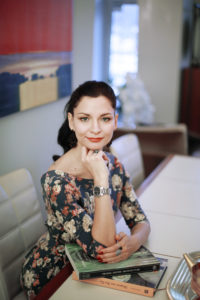
– Olesya, what would you add regarding the outlook for the art world in 2017?
Olesya Sudzhan: Of course, I believe that the coming year will be a successful one for Russian art. Over the past couple of years, attention and interest in our country as a whole, and in its culture and art in particular, have increased considerably. In autumn, the Fondation Louis Vuitton in Paris opened the major exhibition “Icons of Modern Art: The Shchukin Collection. State Hermitage Museum–Pushkin State Museum of Fine Arts.” This event became a landmark joint project between the two countries. At that very time, our gallery was holding an exhibition by a Russian artist in France, and we saw with our own eyes how delighted the French were that art had brought Russia and France together, and how sincerely interested they were in the work of contemporary Russian artists. Therefore, I hope that Russian art will be worthily represented on the international stage in 2017, and we are determined to organise new international projects so that people around the world can see the strength of our country’s artistic potential. And, of course, we will delight our visitors with new names, talented works, and engaging exhibitions at various venues in Moscow and other cities.
– Olesya, Kristina, my next questions for you are: who is the buyer, and who is the connoisseur?
Olesya Sudzhan: At our gallery, the buyer is a modern young person who is firmly established in life, knows what they want, has ambitions of their own, takes an interest in art, and knows how to spend money wisely. Our buyers also include families and middle-aged people who seek to surround themselves with original works that are not necessarily expensive. It is precisely for them that we created our online space and organise interactive exhibition projects.
Kristina Eroshkina: For me, buyers and connoisseurs have always been—and remain—one and the same: people who love art. They are children and adults of different ages. Unfortunately, this field of knowledge is scarcely represented in the Russian education system. The only exceptions are specialist universities and schools—institutions where art history is studied as a dedicated discipline. That is why many people explore it independently. It seems to me that any educational project in the arts enjoys enormous success today. And that success will only grow in the coming years.
Maria Smerchinskaya
Photography: Yana Julliard
